
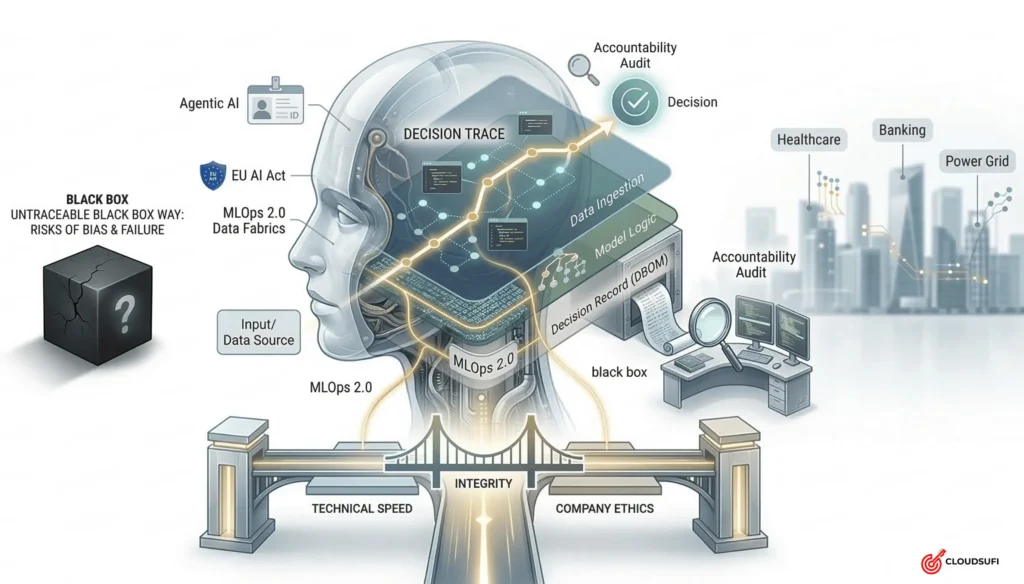
There was a time, perhaps simpler than we cared to admit, when management was a matter of what experts called bounded rationality. In the middle of the last century, leaders operated within the cozy, if frustrating, limits of human memory and the speed of a typed memo. Decisions were slow enough to be taken apart over a long lunch. Today, that world feels like a distant memory. We have moved into an era where a business operates at the speed of light, processing billions of data points in the time it takes to blink. The traditional loops of human observation and action have collapsed into a high-speed blur. We are no longer just managing people or products. We are managing autonomous, data-hungry systems that make choices on our behalf. If we cannot explain why those choices were made, we are essentially running a black box, hoping the gears inside continue to turn in our favor. This is the heart of the algorithm of accountability. It is the realization that in 2026, being able to trace a decision is the only bridge between technical speed and real company integrity.
The Technical Foundation of a Visible Mind
The engineering of accountability begins long before a model makes its first prediction. It starts at the point of data ingestion, in the very circulatory system of the organization. If the data pipelines are the veins, then the decision trace is the marker that tells us where every piece of information came from and how it was changed. We are seeing the rise of MLOps 2.0, a framework that moves beyond just putting code into the world to focus on the health of the entire lifecycle. This involves the use of data contracts and constant validation, ensuring that if a data format changes or a source becomes messy, the system stops before the error can spread. At the center of this technical work lies the Decision Bill of Materials, or DBOM. Much like the lists used for software parts, the DBOM provides a permanent, secure record of every decision point. It captures the raw model outputs, the internal layers of the math, and the specific rules used at the moment of a choice. By using secure computing, a company can create a history that is not only easy to read but also stands up in court. This level of detail transforms AI from a mysterious oracle into a clear process, allowing engineers and auditors to look back in time to see exactly what a model was thinking during a specific failure or success.
The Reality of the Performance Gap and the Human Cost
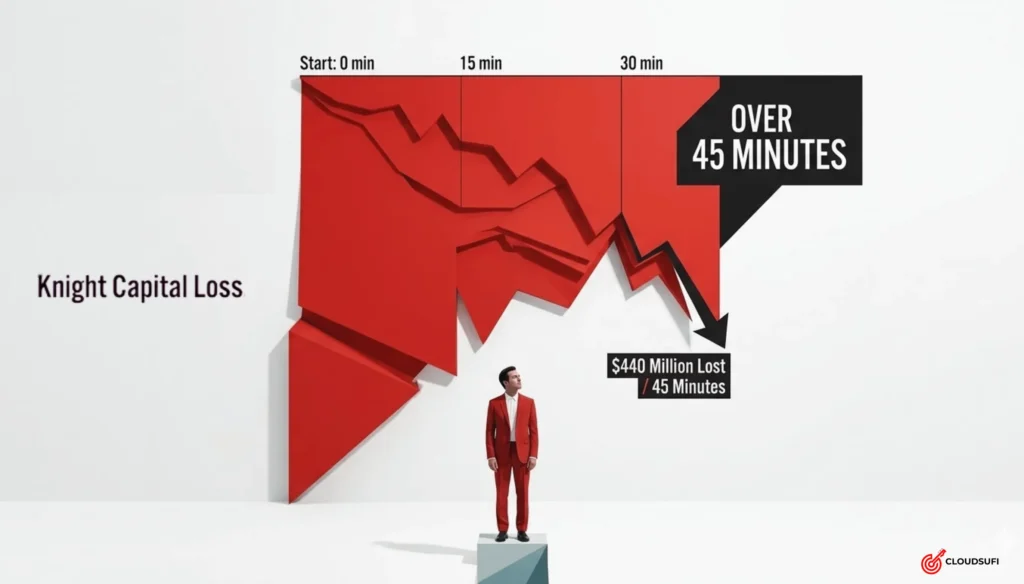
Despite our technical goals, a clear difference remains between how we think AI works and how it actually behaves. We often talk about AI helping people work better, yet the reality is that it often just repeats old biases and fails to notice when the world changes. We saw this clearly in the healthcare sector when a predictive model used spending as a way to measure medical need. Because historical systems had spent less on Black patients, the algorithm concluded they were less sick, effectively automating a legacy of neglect. There was no “why” attached to the score, and without a way to trace the logic, the bias stayed hidden until it was too late. This leads us to a troubling idea known as the moral crumple zone. In these highly automated environments, the people working the machines often end up taking all the blame. They are the ones standing closest to the error when the system fails, even if they have no real control over the underlying logic. When Knight Capital lost $440 million in forty-five minutes because of a software bug, it wasn’t just a money disaster; it was a failure to see what was happening. They couldn’t find the “off switch” because they couldn’t trace the error to its source fast enough. To protect our people and our brands, we must make sure responsibility matches the level of control a person actually has, which requires a record not just of what the AI did, but of what the human was doing at the time.
The New Rules of the Digital Frontier
The shift from optional ethical tips to mandatory legal rules is no longer a future problem. It is the current reality of the global market. The EU AI Act has set a high bar, demanding that high-risk systems—those governing power grids or bank loans—keep automated, secure records of their entire life. Breaking these rules is no longer a small matter. It is a potential seven percent hit to a company’s total global earnings. In the United States, the banking sector is dealing with SR 11-7 standards, which require an “effective challenge” of every model. You cannot challenge what you cannot see. This requires a full list of tools and documentation that allows an outside person to understand how the model works and what it assumes without ever speaking to the person who built it. Even the FDA has changed its stance, requiring specific plans for how AI in medical technology will change over time. Every update made after a product is sold must be tracked back to its original reason and the data used to test it. We are moving toward a world where people expect an explanation for things that affect them. Whether it is a credit limit or a medical diagnosis, the era of “the computer said so” is coming to a necessary end.
Building for Audits in a World of Autonomous Agents
As we move toward Agentic AI—systems that don’t just predict things but actually plan and finish tasks—the way a company builds its tech must change. We can no longer rely on old, rigid data systems. A modern, traceable setup is built in separate layers. There is a layer for rules and policy, a layer for storing data, and a layer for the models themselves. This separation allows for flexibility and ensures that we can swap models without losing the history of our data. Within this setup, we treat AI agents like employees with their own IDs. Every agent has specific permissions that expire and a log of everything they do. We are also seeing the use of “data fabrics” that keep the meaning of information clear across different systems. A 10-layer AI data platform treats data like a product with its own owner and quality rules. By connecting large language models to factual, traceable sources of truth, we can make sure the AI stays grounded. This setup answers the most important question for tech leaders today: Which model used which data, from where, and why did it reach this specific conclusion?
The Value of Trust and the Path Forward
Finally, we must look at the business side of this change. Being able to trace decisions is not just an expense or a way to stay out of trouble. It is a way to stand out in the market. Companies that can prove their systems are fair, safe, and open often pay less for insurance. There is real money to be saved in good governance. For example, in the insurance world, using a traceable workflow for finding data has been shown to save hours of work every week while also making regulators happy. Furthermore, the way people invest has changed. Investment firms now use a 15-point checklist to check AI risks before they give a company money. They look for where data came from and how bias is caught. With nearly half of the biggest companies now making AI risk a priority for their boards, the gap between those who follow the rules and those who don’t is closing. Those who fall behind, who continue to run systems without logs or controls, are the ones most likely to have security problems. Integrity in this new age is not a feeling. It is a documented, proven history of why a company did what it did.
The goal for the next two years is to turn accountability from a fancy word into a technical reality. This means moving toward better data habits where every change is checked and every choice is recorded. It means protecting your team by making sure they aren’t blamed for things the machine did on its own. Most importantly, it means accepting that as our systems get smarter, our job to understand them only gets bigger.