
A commercial millwork bid draws on plans, elevations, details, and schedules. CLOUDSUFI built a workflow that links detected scope to its source drawings, so estimators can verify it before pricing and carry approved data into proposals and CAD.
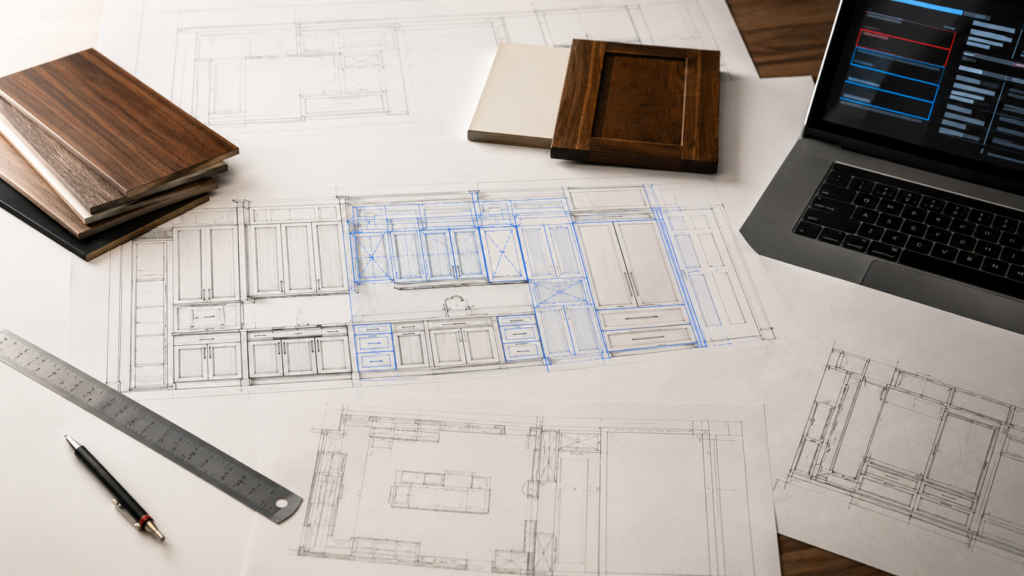
On a commercial millwork job, the information needed for a bid is scattered across plans, elevations, details, and schedules. An estimator first sorts the set and finds the callouts. Then come the measurements, the room-to-elevation checks, and the scope of work.
On large drawing sets, that work can take days or weeks. Scope is entered into estimating tools, copied into proposals, and often entered again when drafting begins. Every handoff adds effort and another chance for a missed item or transcription error, while senior estimators spend more time hunting for information than making production decisions.
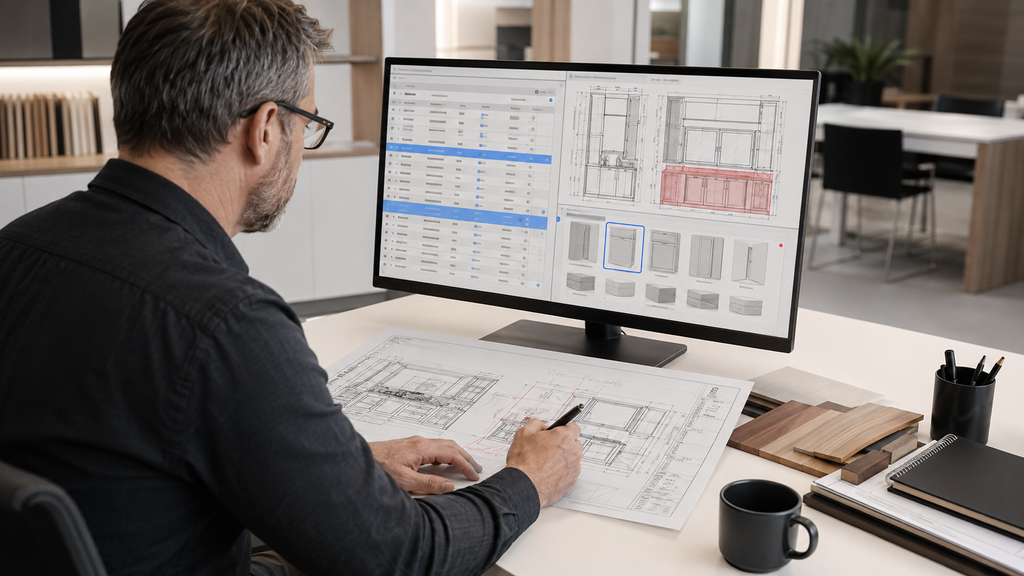
CLOUDSUFI helped MillworkSuite connect those steps. A drawing set goes in; the relevant pages are organized and the millwork in elevations and details is identified. Rooms, callouts, and scope lines stay linked to their source, so the estimator can check the work without retracing the entire set.
The workflow supports drawing sets from different architecture firms and keeps the estimator in control at every stage: organize (sorts and labels the drawing set so relevant pages are ready for review), discover (detects rooms, millwork types, elevation markers, dimensions, and related scope), link and verify (connects rooms, callouts, elevations, details, and scope lines in a side-by-side review view), and price and hand off (applies the manufacturer’s rates and rules, generates a scope-of-work proposal, and exports approved data to Excel or CAD without re-entry).
Under the hood, a four-stage computer vision workflow prepares the work for estimator review: segmentation finds drawing regions, entity recognition identifies millwork items, relationship mapping connects parts and context, and structured output prepares estimate inputs. Estimator review remains in the workflow before work moves forward.
CLOUDSUFI built the document-intelligence layer behind the product. It covers page organization, elevation and scope detection, calibrated measurement, relationship mapping, and structured output. CLOUDSUFI also connected this layer to MillworkSuite’s estimating process. The estimator still reviews every item, corrects exceptions, and approves the bid.
“We uploaded a set we'd never seen before — a completely new architect, a style our team hadn't worked with. It picked up 88+ boxes at high accuracy. We didn't have to train it.”
Active pilot participantMillworkSuite
Review is not a checkbox at the end. Each scope line remains connected to its source drawing, so verification becomes a focused review instead of another search through the set. Nothing enters a bid until a person confirms it. Automation accelerates the repetitive work; estimators retain control of the decision — the result is faster preparation without removing professional judgment.
MillworkSuite reports a 40–60% drop in estimating effort across scope discovery, pricing, and proposal preparation. On large commercial jobs, it reports a further 40–60% reduction in drafting time when the approved scope enters CAD with the right libraries already matched.
Reported scope-discovery accuracy is above 90% on commercial jobs, even when the architect’s drawing style is new to the system. That does not remove the review step. Estimators still handle exceptions and decide the quantities, inclusions, design intent, and material requirements.
The checked scope does not have to be rebuilt for Excel, the proposal, and CAD. That removes several handoffs where information can be mistyped or missed before shop drawings begin. What used to take days or weeks of manual preparation now runs as AI-assisted preparation plus estimator review.
Page sorting, first-pass scope discovery, and repeat data entry no longer consume as much of the estimator’s week. Senior staff have more time for design intent, client conversations, and production decisions. They can review more drawing sets while keeping the same approval step.
“The AI covers the volume; our team handles the judgment calls. We can verify the scope faster and keep the estimator in control of the number.”
MillworkSuite team
Production receives the checked scope earlier. It is ready for the proposal, Excel export, or direct CAD handoff.
Architectural drawings rarely arrive once. When a revision lands, MillworkSuite compares it with the earlier set and flags what was added, removed, or changed. Estimators can re-price those differences instead of rebuilding the job.
Everything that did not change stays in place. The estimator reviews the differences, approves them, and sends the revised scope into the proposal or CAD. Human approval remains the control point from the first bid through production.
Let's build what's next.
Talk to us about your data and AI challenges — and how CLOUDSUFI can help solve them.
Talk to us →