What It Takes to Close the Enterprise AI Execution Gap
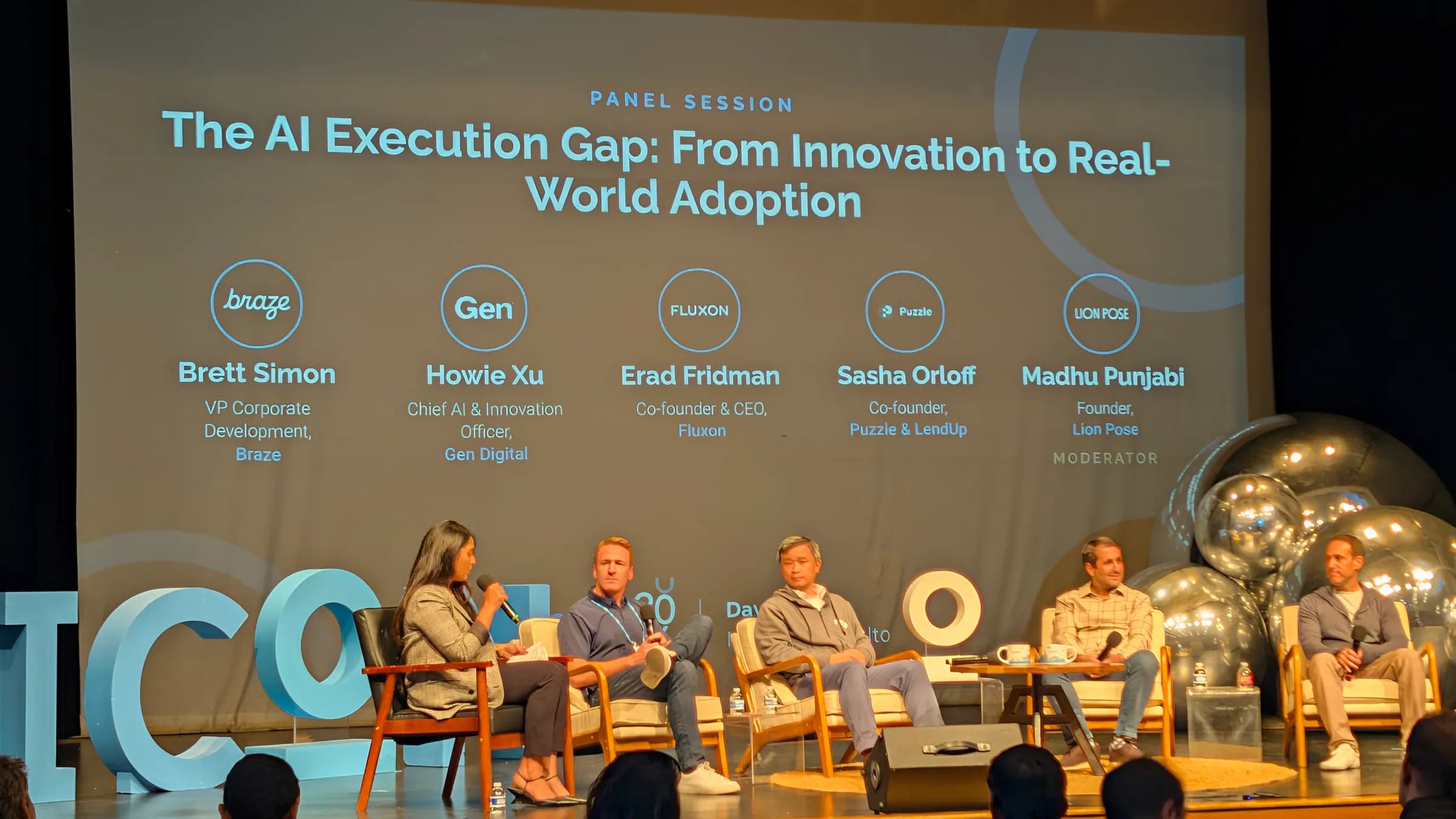
The AI Execution Gap panel explored business outcomes and the choices involved in enterprise adoption.
An AI project can deliver working software quickly and still leave the business waiting for results. The difference often sits in the surrounding workflow: the systems it connects to, the decisions people must make and the conditions under which it has to operate.
That was a useful thread across the sessions CLOUDSUFI attended at ICONIC Innovation Week 2026 in Palo Alto. Gershon represented CLOUDSUFI at the event, connecting with founders and enterprise leaders and attending discussions on AI execution, infrastructure, security and product development.
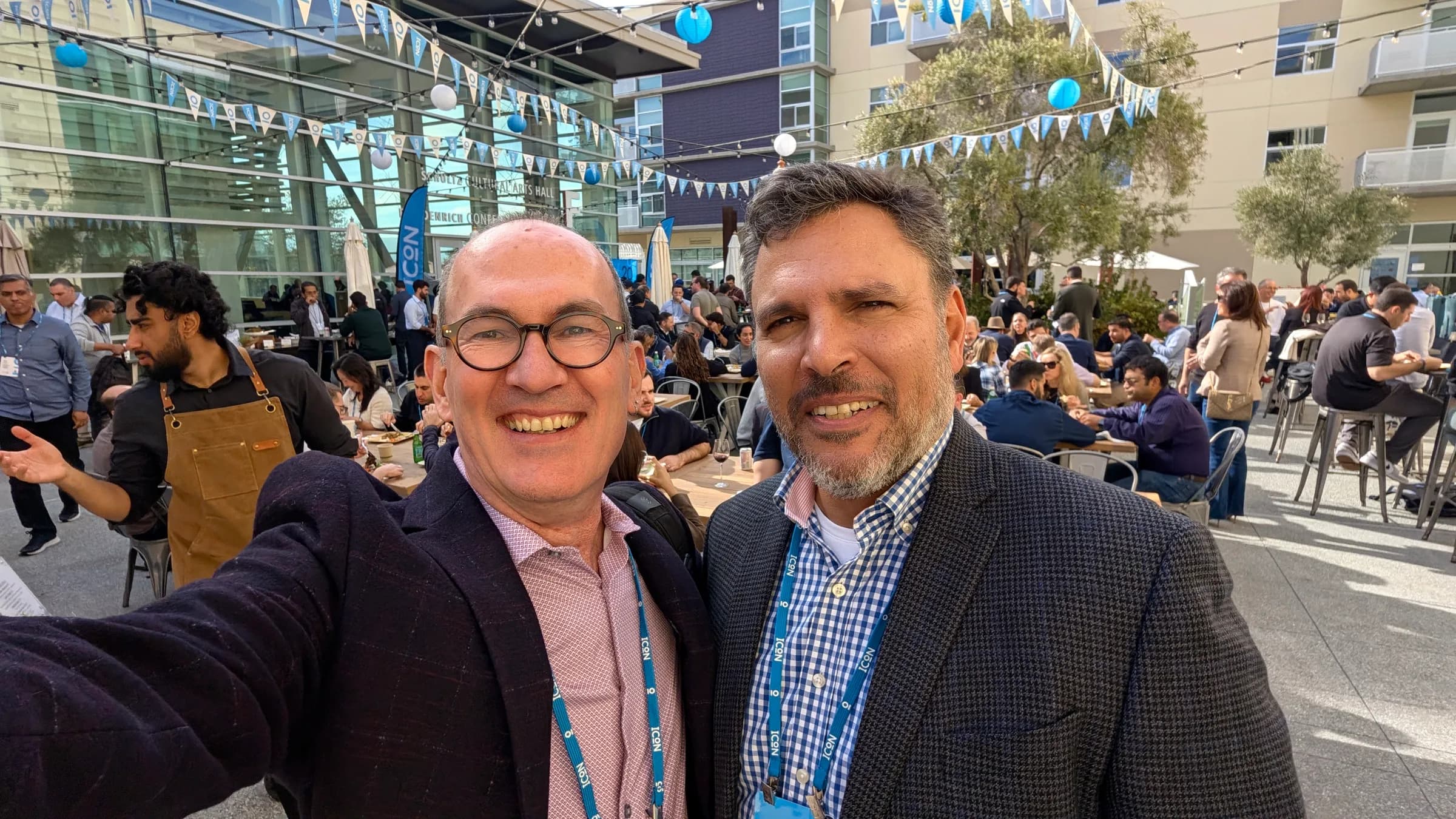
Gershon represented CLOUDSUFI at ICONIC Innovation Week, connecting with founders and enterprise leaders.
Taken together, those discussions point to a practical approach: define the operational improvement first, then organise the engineering and adoption work around it.
Define what should change in the business
The AI Execution Gap panel examined how to demonstrate value when software is becoming easier to build. Howie Xu urged solution providers to work backward from the intended outcome. The discussion placed customer needs and measurable improvements at the centre of the decision.
One example involved a vendor-onboarding project designed to shorten the time needed to bring suppliers into a business. The work required operational changes alongside software. The example matters because it makes the unit of progress clear: a completed business process.
For an enterprise team, that means agreeing on a baseline before development begins. How long does the process take? Where do people repeat work? Which exceptions cause delays? Choose a measure that remains meaningful after the application launches, and identify who will track it.
Decide where custom development earns its place
The same panel explored a build-or-buy decision that is becoming more complicated as AI reduces development effort.
One perspective favoured building where a closer fit to a company's needs creates a meaningful advantage. Howie Xu also raised the demands that appear when a tool moves from individual use to wider organisational adoption, including standardisation, security and compliance.
Our takeaway is to evaluate the workflow in parts. A business may use an established platform or external API while building the integration, rules or user experience specific to its operations. The useful question is where custom work changes the outcome enough to justify maintaining it.
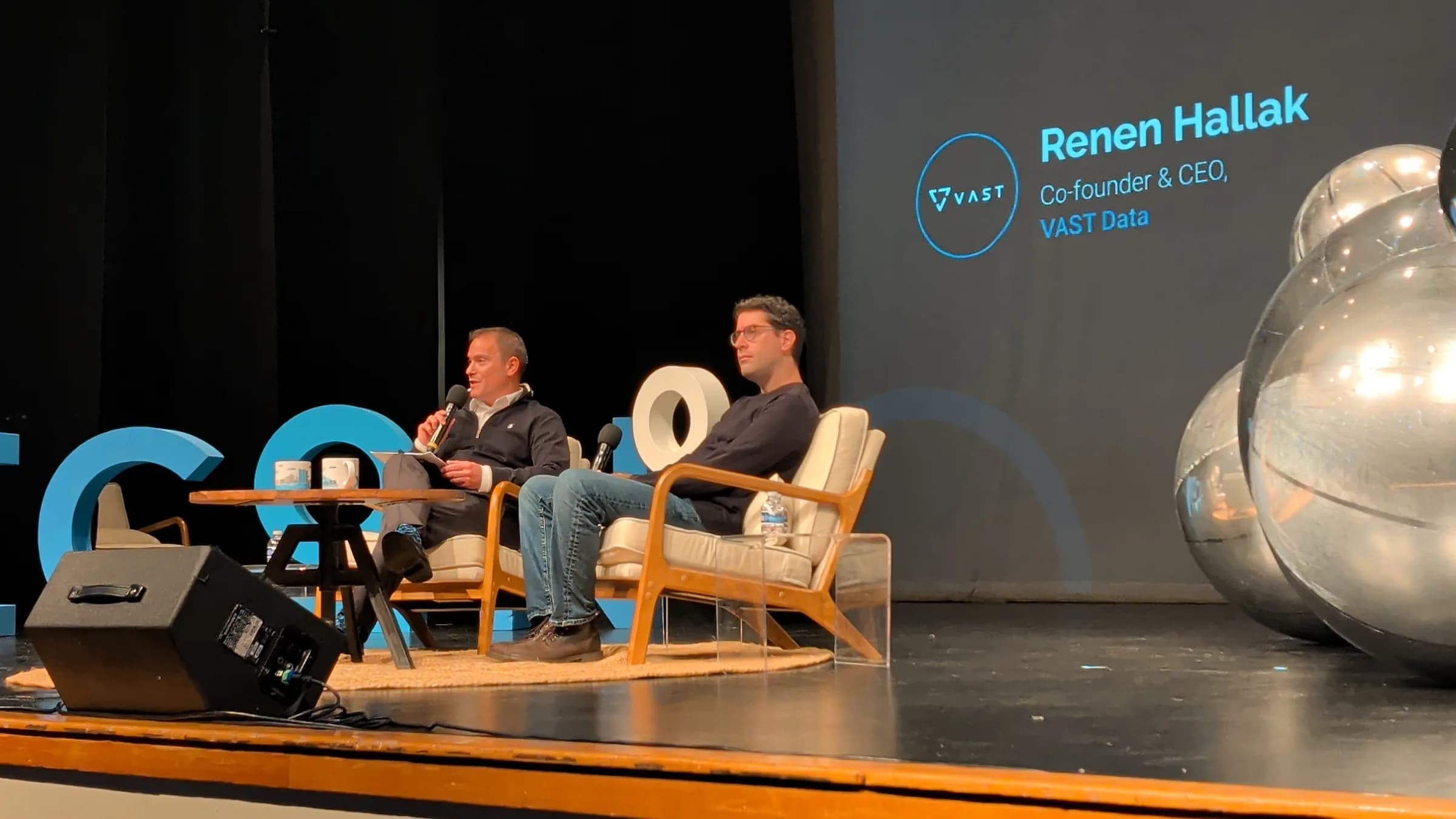
VAST Data co-founder and CEO Renen Hallak discussed AI infrastructure and enterprise adoption.
Prepare the data and infrastructure for actual use
In his session, VAST Data co-founder and CEO Renen Hallak discussed the infrastructure behind AI workloads and the capability, regulatory and infrastructure barriers that can slow enterprise adoption. He also emphasised staying close to customers to understand what needs to be built.
For enterprise delivery teams, this raises concrete questions about the environment in which an application will run. Can it reach the data it needs? Are permissions consistent across connected systems? Can the infrastructure support the workload as usage grows?
These are useful design questions early in a project. Their answers can change the scope, cost and feasibility of the proposed workflow before a pilot becomes a wider deployment.
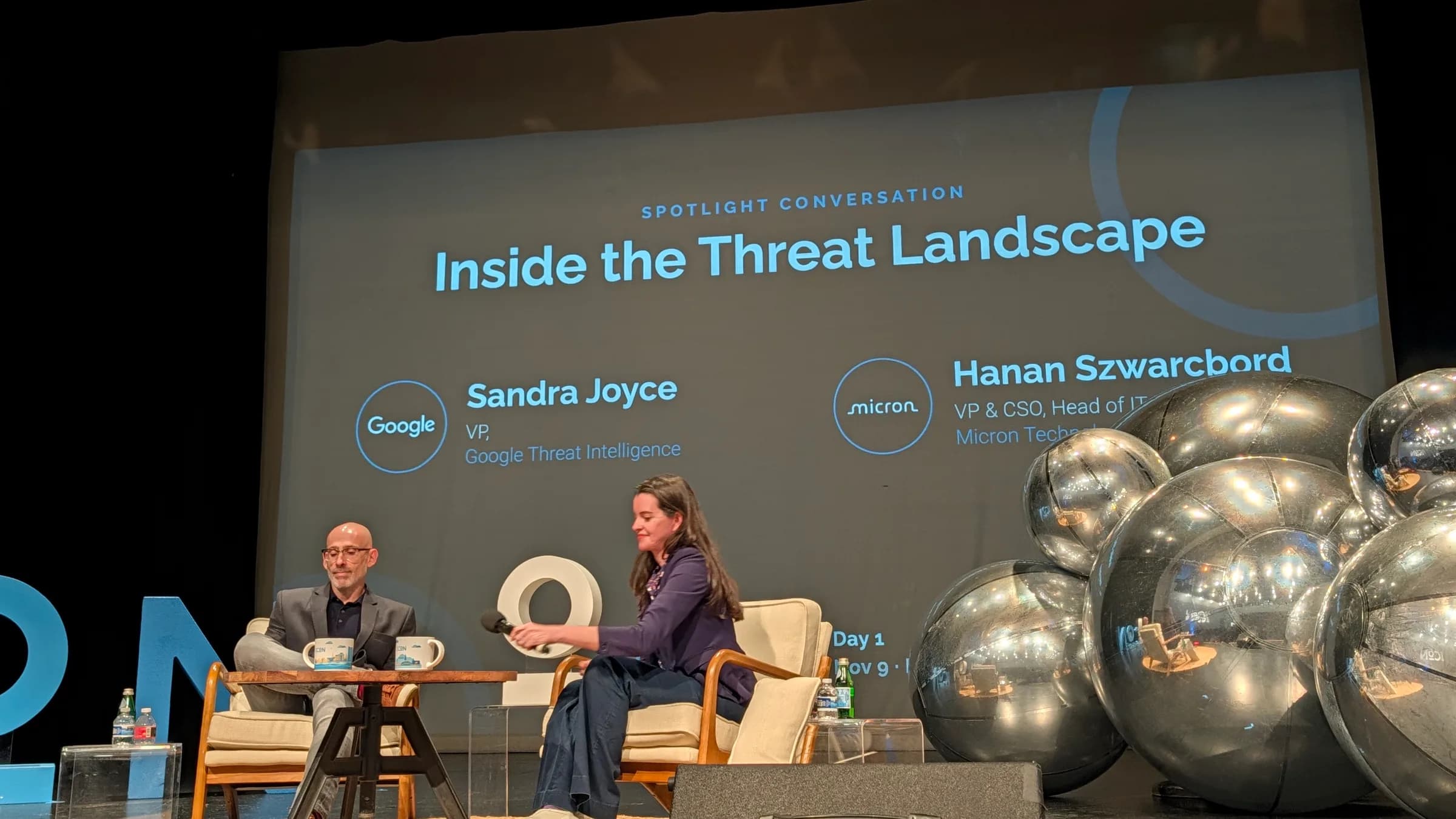
Sandra Joyce and Hanan Szwarcbord discussed threat response and controls that support AI adoption.
Make security part of how the workflow operates
The security discussion with Google's Sandra Joyce and Micron's Hanan Szwarcbord connected AI adoption with the ability to act on threats. Joyce highlighted the speed of containment and remediation. Szwarcbord discussed enabling more tools under stronger controls, supported by foundations such as role-based access and network separation.
For a team introducing AI into an operational process, the implication is to define what the system may access and do, and how people intervene when its behaviour needs attention. As workflows gain the ability to take action, those boundaries become part of the product design.
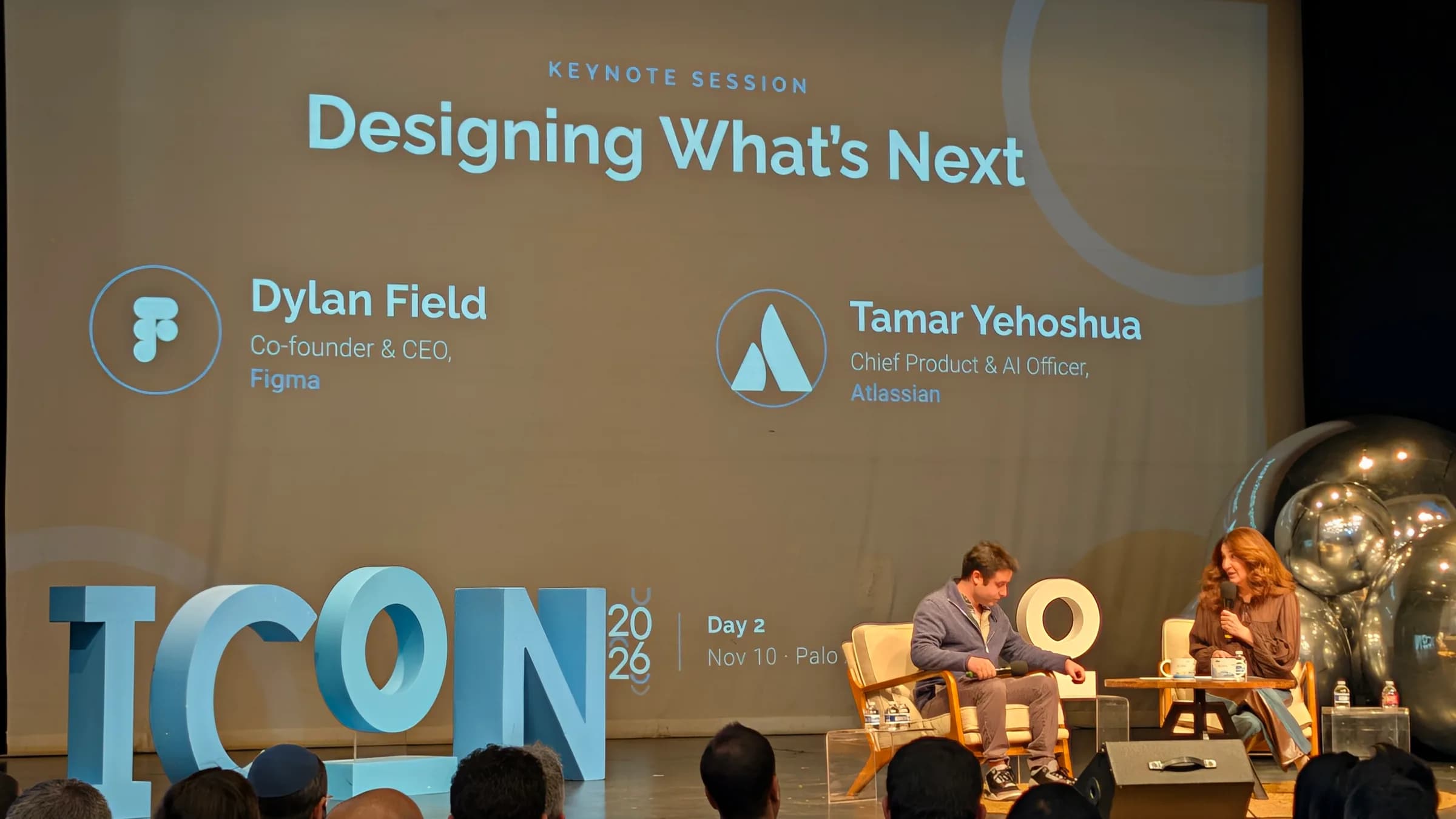
Dylan Field and Tamar Yehoshua explored product development, design and the role of human judgment.
Preserve judgment as development accelerates
In the Figma and Atlassian session, Dylan Field discussed the need for deliberate work on choices that are difficult to verify, including architecture and design. Tamar Yehoshua also raised the unresolved challenge of designing effective interaction between people and agents.
An application that is quick to produce still needs to fit the way people work. Teams need to understand where users require an explanation, when a result needs review and how an exception moves to the right person. Customer research and engineering judgment help answer those questions before a poor design becomes expensive to change.
Begin with one workflow and a clear measure
For CLOUDSUFI, the connection across these discussions is practical. Enterprise AI requires data and engineering work that fits a business process and supports the people responsible for it.
A useful starting point is one workflow with a known problem, an agreed measure of improvement and someone accountable for the result. From there, teams can choose what to buy, what to build and what must be in place to operate it reliably.
Which workflow would make the strongest starting point in your organisation?