SAIL enables earlier detection of gas flaring risks with predictive analytics
CLOUDSUFI helped the Saudi Accelerated Innovation Lab (SAIL) connect remote plant telemetry with predictive models and a web command center. The platform provided 30–90 minutes of advance warning of potential flaring events, giving operators time to assess risks and take mitigation actions.
- Connected high-frequency sensor data from remote gas-oil separation plants to a Google Cloud analytics platform.
- Combined time-series forecasting and anomaly detection to identify emerging flaring risks.
- Built a web command center with facility-level visibility, live risk indicators, and recommended mitigation actions.
Overview
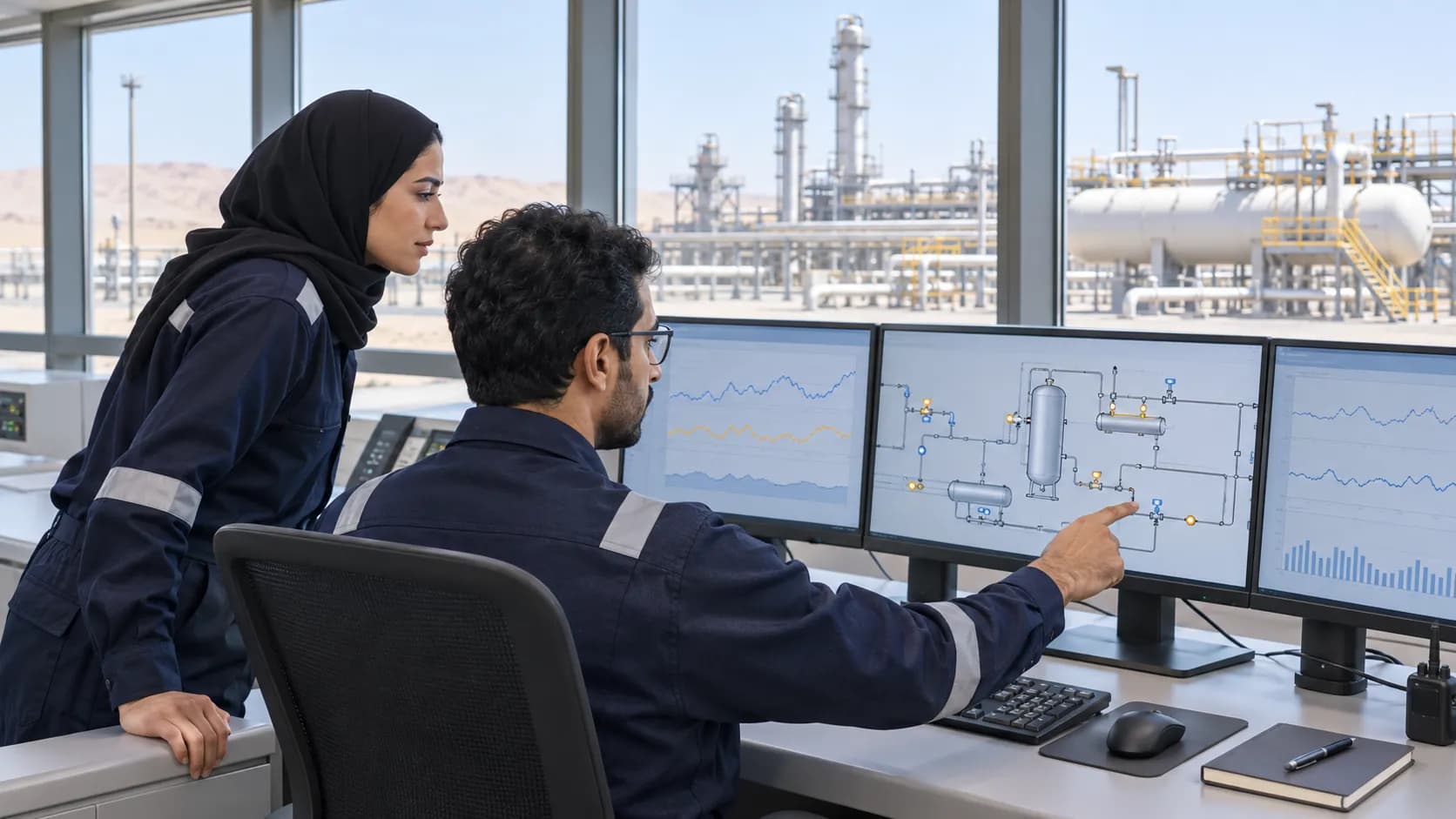
SAIL needed an industrial telemetry platform to monitor and predict gas flaring events across remote gas-oil separation plants (GOSPs). The objective was to give operators earlier visibility into developing process conditions so they could adjust valves and separators before a potential flaring event.
The platform needed to process continuous readings from industrial sensors while accommodating network interruptions at remote facilities. It also had to translate those readings into information that control-room teams could use during operations.
CLOUDSUFI built an integrated solution spanning industrial data ingestion, resilient edge connectivity, predictive machine learning, and a web command center. The engagement connected sensor-level changes with facility risk monitoring and operator decision support.
Challenges
Earlier intervention depended on reliable data from remote facilities
Reactive monitoring and retrospective log analysis limited the time available to respond to developing flaring conditions. Moving toward predictive intervention required a continuous view of plant behavior and the ability to distinguish routine adjustments from genuine anomalies.
The engagement addressed four connected challenges:
- High-frequency industrial data: Pressure, temperature, flow-rate, and valve-position readings needed to be processed together across more than 1,000 continuous sensor tags per facility.
- Unreliable remote connectivity: Satellite and cellular interruptions could delay telemetry and create gaps in the operational picture.
- Limited response time: Operators needed both rapid alerts about current changes and advance warning of potential flaring conditions.
- Actionable operational context: An anomaly needed to be linked to the relevant facility, module, or valve and accompanied by guidance for intervention.
The platform therefore needed to preserve data continuity, interpret changing process conditions, and present the resulting insights within a control-room workflow.
Solution
Connecting industrial telemetry with predictive decision support
CLOUDSUFI developed the platform on Google Cloud, combining streaming infrastructure, edge buffering, machine learning, and an operational web interface.
Continuous ingestion from industrial systems
OSIsoft PI Historian connectors collected sensor tags covering pressure, temperature, flow rates, and valve positions.
Google Cloud Pub/Sub and Dataflow supported real-time edge-to-cloud ingestion and stream processing. The pipelines connected physical equipment changes with downstream analytics and control-room alerts, achieving end-to-end processing times below five seconds.
Resilient data delivery during network interruptions
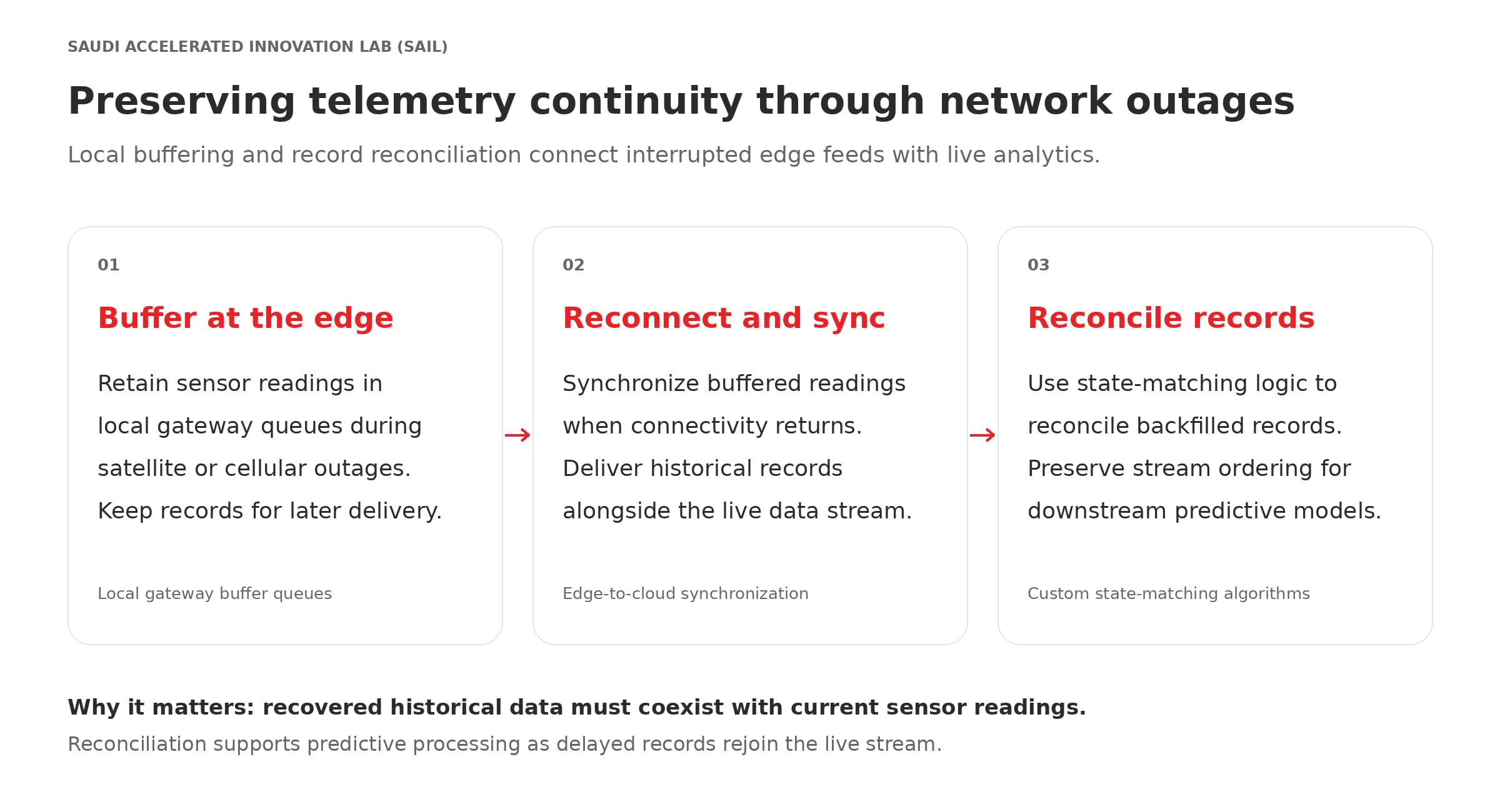
Local gateway queues buffered telemetry during satellite or cellular outages and synchronized the stored readings when connectivity returned.
Custom state-matching algorithms reconciled historical records arriving after an outage with the live stream. This preserved event ordering and supported downstream predictive processing as delayed data was recovered.
The approach maintained data continuity across intermittent remote network conditions, with the engagement reporting zero packet loss during network degradation.
Predictive models for emerging flaring conditions
CLOUDSUFI engineered features from the sensor streams, including rolling variability, rates of change, and correlations between sensors. These features helped isolate early indicators of potential flaring events.
Historical operational datasets were automatically labeled to distinguish routine process adjustments from anomalies. Models hosted on Vertex AI combined time-series forecasting with autoencoder-based anomaly detection.
The predictive models provided 30–90 minutes of advance warning before potential flaring occurrences, giving operators time to assess conditions and undertake mitigation steps.
A web command center for operational response
CLOUDSUFI developed an interactive portal showing facility locations and operational asset topologies.
Continuously updated, color-coded risk indicators displayed flaring risk at facility, module, and valve level. This helped operators locate emerging issues within the wider plant context.
The portal also incorporated prescriptive playbooks recommending operator interventions, such as bypass-valve adjustments, based on the factors contributing to the model’s risk assessment.
Outcomes
Earlier warnings expanded the opportunity for intervention
The platform connected live industrial telemetry with predictive insights and operational guidance. Operators gained both rapid visibility into equipment changes and advance warning of potential flaring conditions.
Predictive models delivered 30–90 minutes of lead time, while streaming pipelines generated control-room alerts in under five seconds. The engagement reported a 99.9% reduction in anomaly detection latency, moving from days of retrospective log analysis to near-real-time detection.
The ingestion architecture supported more than 1,000 continuous sensor tags per facility. Edge buffering and synchronization maintained 100% data fidelity across intermittent remote network environments.
Together, these capabilities supported a shift from retrospective investigation toward earlier, informed intervention. Facility-level risk visibility and recommended mitigation actions gave control-room teams a clearer basis for responding to developing flaring conditions.
Let’s build what’s next.
Talk to us about connecting industrial data with predictive insights and operational decision support.
Book Workshop →